

Our Work
The Urban Conservation Strategies Specialist Group promotes urban protected and conserved areas as a distinct part of global conservation. We advance IUCN policy and develop innovative projects such as the Dark Skies Advisory Group and the Trails and Conservation Working Group, all aimed at linking people, cities, and nature for a more just and sustainable future.

Dark Skies
The Dark Skies Advisory Group, part of the IUCN WCPA Urban Conservation Strategies Specialist Group, works to advance understanding of the importance of natural darkness and ways to reduce the impacts of artificial light. The group maintains the World List of Dark Sky Places and has produced The World at Night: Preserving Natural Darkness for Heritage Conservation and Night Sky Appreciation. By highlighting the ecological, cultural, and aesthetic value of natural night skies, Dark Skies underscores why protecting them is essential for biodiversity, heritage, and human well-being.

USA National Park Service (Public Domain)
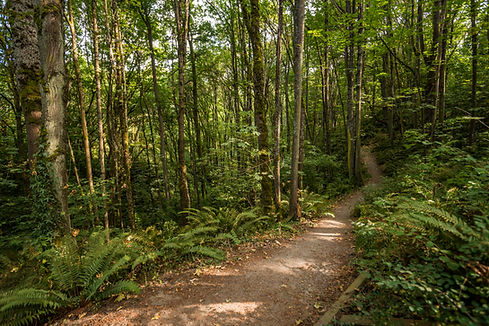
Seattle Parks and Recreation / CC BY 2.0
IUCN Trails
The Trails and Conservation Working Group was established in 2019 by the IUCN WCPA Urban Conservation Strategies Specialist Group to explore how long-distance trails can serve as conservation tools. Since 2021, it has been conducted in cooperation with the IUCN WCPA Tourism and Protected Areas Specialist Group. Because trails often run through protected and conserved areas, they are an important way of linking people, cities, and nature. Well-marked and well-publicized trails can connect urban areas to natural areas, and also link protected places to one another.
During the 2025 World Conservation Congress, a new motion titled Trails and Conservation was formally adopted, recognizing trails and ecological trail corridors as powerful—yet often underutilized—tools for biodiversity conservation, especially in urban and peri-urban areas. Led by the WCPA Trails and Conservation Working Group in partnership with the World Trails Network and supported by the InterEnvironment Institute, this milestone advances global conservation policy and contributes to the Kunming–Montreal Global Biodiversity Framework and the Sustainable Development Goals — read more in our New Year’s Update.